
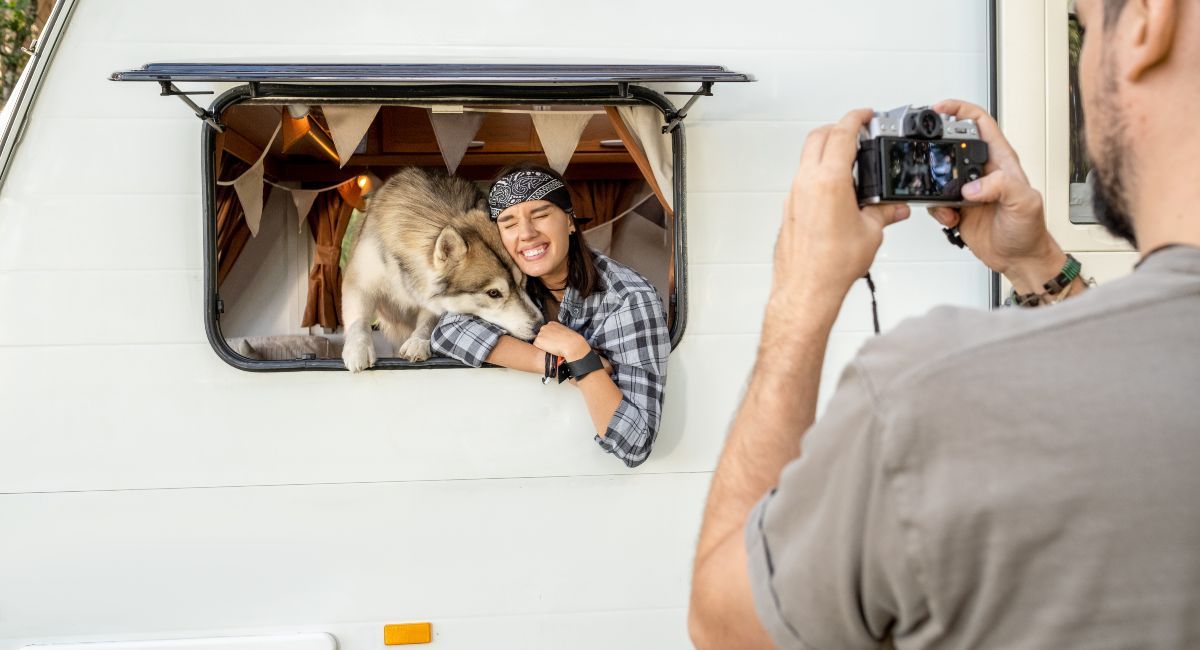
Oh, the places you'll go with your pet — when you know where they're permitted. Dog-friendly national parks do exist, but the rules vary a lot from park to park. Most parks allow leashed dogs in developed areas like roads, parking lots, and campgrounds, a handful open almost every trail to dogs, and the big Western parks keep dogs off trails entirely. This guide covers 17 parks, the B.A.R.K. Ranger program, and how to plan an RV trip around your dog.
The Bottom Line
- Most parks allow pets in developed areas on a leash no longer than 6 feet, per National Park Service rules.
- The most dog-friendly parks — Acadia, Shenandoah, Petrified Forest, New River Gorge, Cuyahoga Valley, and Mammoth Cave — open most trails to leashed dogs.
- The big Western parks — Yellowstone, Glacier, Rocky Mountain, Big Bend — keep dogs off trails.
- Earn a B.A.R.K. Ranger badge at participating parks.
- Plan trail days: use a park kennel where offered, or a dog-friendly national forest nearby.
Are dogs allowed in national parks?
Yes, in most national parks — but usually with limits. The National Park Service says parks welcome pets in developed areas, on many trails and campgrounds, and in some lodging. Federal rules require a leash no longer than 6 feet and bar pets from public buildings and swimming beaches. Each park sets its own trail rules, so check before you go.
The NPS pets page says "National parks welcome pets—in developed areas, on many trails and campgrounds, and in some lodging facilities." The federal regulation behind it, 36 CFR 2.15, requires pets to be restrained "on a leash which shall not exceed six feet in length," prohibits pets in public buildings, public transportation, and swimming beaches, and bans leaving a pet unattended and tied to an object.
The B.A.R.K. Ranger program
Many parks invite dogs to become B.A.R.K. Rangers. The NPS spells out the B.A.R.K. principles: "Bag your pet's waste." "Always use a leash." "Respect wildlife." "Know where you can go." At participating parks, you take the pledge at a visitor center and your dog gets a badge or tag.
What are the most dog-friendly national parks?
The most dog-friendly national parks let leashed dogs use most or all of their trails. Acadia, Shenandoah, Petrified Forest, New River Gorge, Cuyahoga Valley, Mammoth Cave, White Sands, and Wrangell–St. Elias all welcome dogs well beyond the parking lot. Grand Canyon's South Rim is a solid bonus pick for rim walks.
Acadia National Park (Maine)
Acadia offers 100 miles of hiking trails and 45 miles of carriage roads where pets are permitted. The park says some places aren't safe for dogs and advises avoiding ladder and rung trails, so check its lists of trails closed to pets and not recommended for pets. The NPS also says "Do not leave your pet unattended, including at campsites or in cars." Plan your visit with our Acadia National Park RV guide.
Shenandoah National Park (Virginia)
Pets are barred on fewer than 20 of Shenandoah's 500-plus trail miles. The current NPS list names 11 closed trails, including Old Rag, Dark Hollow Falls, Bearfence Mountain, and the Stony Man summit spur. "Pets are allowed in campgrounds and pet-friendly lodging is available." See our Shenandoah National Park RV guide.
White Sands National Park (New Mexico)
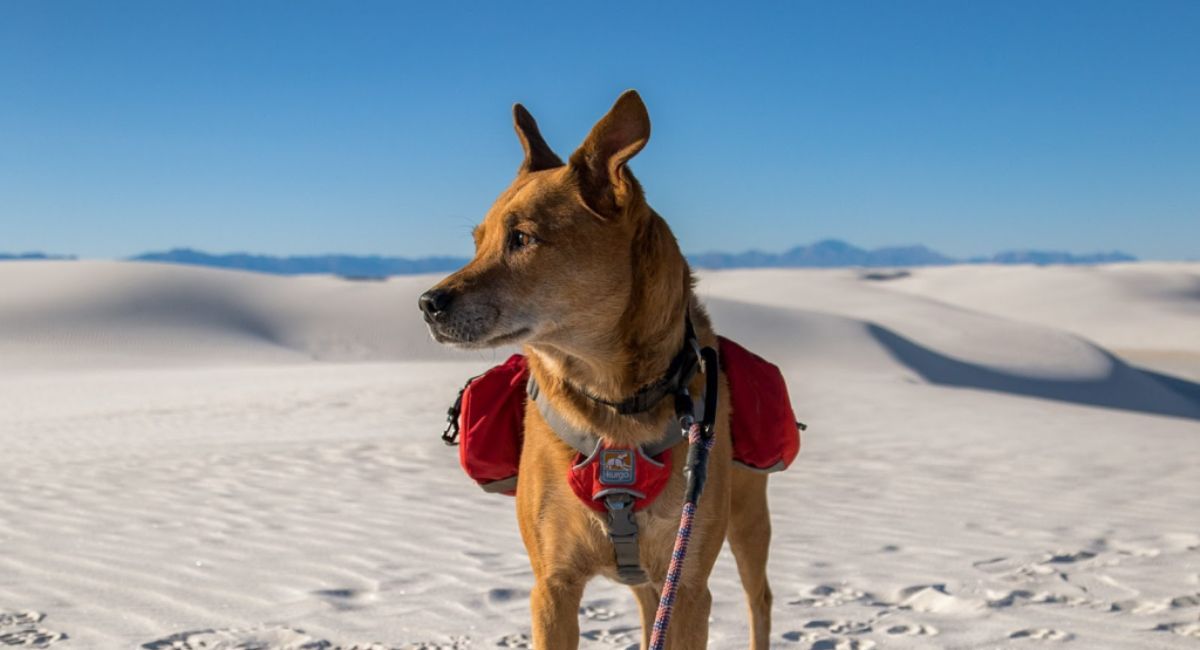
At White Sands, dogs can go almost anywhere you can, "as long as they are non-disruptive, on a leash no longer than six feet, and are under physical control at all times." Pets aren't allowed inside the visitor center.
Petrified Forest National Park (Arizona)
Petrified Forest is often called the most dog-friendly national park. Pets are allowed on any paved road or trail as well as all designated wilderness, though only service animals are allowed in park buildings. Hosts in northern Arizona tell us it's the park their dog-owning renters ask about most. Pick up a rig with RV rentals near Petrified Forest.
New River Gorge National Park and Preserve (West Virginia)
Pets are allowed on all trails at New River Gorge — the only exceptions are ranger-led programs and park buildings.
Mammoth Cave National Park (Kentucky)
Leashed pets can use all surface trails but not the caves or park buildings. Instead of the "on-site boarding" we described in 2022, the park now lists a self-service outdoor kennel run by The Lodge at Mammoth Cave, open during daylight hours, with vaccination records required.
Wrangell–St. Elias National Park and Preserve (Alaska)
The largest national park allows dogs on trails and in the backcountry as long as they're properly controlled on a leash. Remote access means most RV renters base outside the park and drive in on gravel roads in summer. RVers we've met in Alaska say a dog makes those long, quiet trails feel even wilder.
Cuyahoga Valley National Park (Ohio)
Dogs can hike over 100 miles of trails plus the Towpath Trail. They're not allowed on the East Rim mountain bike trails, in park buildings, or on the Cuyahoga Valley Scenic Railroad.
Bonus: Grand Canyon National Park (Arizona)
On the South Rim, leashed pets can walk the trails above the rim, but "pets are never allowed below the rim." The North Rim is more limited: leashed pets are allowed only on the bridle trail (greenway), and there's no kennel there. The park also lists North Rim closures tied to the 2025 Dragon Bravo Fire, so check the North Rim's status before you plan a visit.
Which national parks are least dog-friendly?
The least dog-friendly national parks keep dogs off nearly all trails, limiting them to roads, parking areas, campgrounds, and picnic areas. Rocky Mountain, Yellowstone, Glacier, and Big Bend allow no trail hiking with dogs, while Yosemite, Great Smoky Mountains, Zion, and Joshua Tree allow dogs on only a few short, mostly paved trails.
The original version of this guide listed the NPS's reasons, and they still hold: dogs can spread disease to wildlife, chase animals, disturb the quiet, and attract predators. RVers we talk to who travel with dogs often skip the trail-heavy Western parks — or plan kennel days so they can still hike.
Rocky Mountain National Park (Colorado)
Pets are prohibited on ALL Rocky Mountain National Park trails, tundra, and meadows. Dogs can join you on roads, in parking areas, campgrounds, and picnic areas.
Yosemite National Park (California)
Yosemite allows pets on fully paved roads, sidewalks, and bicycle paths — including the paved Bridalveil Fall, Lower Yosemite Fall, and Cook's Meadow trails — and in all campgrounds except walk-in campgrounds like Camp 4 and group campsites. Other trails, such as the trail to Vernal Fall, are off-limits "even if carried," with one more exception: the Wawona Meadow Loop.
Great Smoky Mountains National Park (Tennessee/North Carolina)
Dogs are welcome in campgrounds, picnic areas, and along roads, but Only two trails permit leashed pets: the Gatlinburg Trail and the Oconaluftee River Trail.
Zion National Park (Utah)
The paved Pa'rus Trail is the dog-friendly trail Zion's pets page names, and the park asks you to "Keep dogs out of the water and on a leash while in Zion." The NPS lists boarding kennels in Hurricane, St. George, Kanab, Cedar City, and Rockville. RV note: since June 7, 2026, vehicles taller than 11 feet 4 inches, wider than 7 feet 10 inches, or longer than 35 feet 9 inches are banned from the Zion–Mount Carmel Highway between Canyon Junction and the East Entrance; vehicle-and-trailer combinations can't exceed 50 feet overall.
Yellowstone National Park (Wyoming/Montana/Idaho)
In the world's first national park, pets must stay within 100 feet of roads, parking areas, and campgrounds and aren't allowed on boardwalks, trails, in the backcountry, or in thermal areas — even if carried. "There are no kennels in Yellowstone." We've watched plenty of road-trippers learn about the 100-foot rule at the entrance station. Base nearby with RV rentals near Yellowstone.
Glacier National Park (Montana)
Pets aren't permitted on trails or along lakeshores outside developed areas, in the backcountry, or in buildings. One exception: dogs on leash are allowed on the bike path between Apgar and West Glacier when it's free of snow.
Big Bend National Park (Texas)
Your pet can only go where your car can go.There's no kennel service in the park; the NPS lists boarding options in Terlingua and Alpine.
Joshua Tree National Park (California)
Leashed pets can go within 100 feet of roads, picnic areas, and campgrounds, and on the paved Oasis of Mara and Keys View trails. "Anywhere you can drive your vehicle, you can go with your leashed pet" — including unpaved roads.
What do you do with your dog while you hike?
Use a park kennel where one exists, book a boarding kennel or sitter in a nearby town, or split the day so your dog hikes with you on dog-friendly national forest trails. A few parks, like Grand Canyon and Carlsbad Caverns, run kennels; many, like Yellowstone and Big Bend, don't.
- Park kennels: Grand Canyon's pets page lists a kennel on the South Rim near Maswik Lodge, open daily from 7:30 a.m. to 5 p.m., and reservations are highly recommended. Carlsbad Caverns' concessioner runs a day kennel for $15 a day, with no overnight stays.
- Nearby towns: several NPS pet pages list boarding towns — Zion and Big Bend among them.
- National forests: the Gila National Forest says "Dogs are welcome in all campgrounds, picnic areas and on most trails," with a leash in developed sites. Rules vary by forest, so check locally.
In our experience, a day at a park kennel beats a dog alone in a hot rig every time.
Can you leave your dog in the RV at a national park?
It depends on the park, and many say no. Acadia and Carlsbad Caverns don't allow leaving pets unattended in vehicles, while Yellowstone allows only short periods. Several parks prohibit it whenever conditions could harm the animal. Even with A/C, power can fail, and some remote park campgrounds have little or no cell signal for alerts.
- Acadia: "Do not leave your pet unattended, including at campsites or in cars."
- Carlsbad Caverns: "You are not allowed to leave your pet unattended in vehicles."
- Yellowstone: "Pets may remain in vehicles for short periods of time."
- Rocky Mountain: you may not leave a pet in a vehicle "if it creates a danger to the animal."
- White Sands: the park warns that within ten minutes, a vehicle's inside temperature can climb 25 degrees above the outside temperature.
For more on heat and safety, see our guide to keeping pets safe in the RV when you're away.
How do you plan a pet-friendly RV trip to a national park?
Book a pet-friendly RV rental and a campground that allows dogs, read the park's NPS pets page before you go, and plan trail days around your dog. Pack a 6-foot leash, waste bags, water, and paw protection for hot pavement, and reserve a kennel early where the park offers one.
- Check the park's pets page — every rule above links to it.
- Book campgrounds that allow pets. Yosemite, for instance, allows pets in all campgrounds except walk-in and group sites.
- Watch the pavement: Joshua Tree warns that hot sidewalks and pavement can burn your pet's feet, so walk during cooler parts of the day.
- Reserve kennels early in summer and on holidays.
Our guide to camping with pets covers gear and campsite tips. Hosts tell us renters who mention their dog upfront find the best pet-friendly rigs fastest. Now you're ready to ride off into the sunset — B.A.R.K. rules and all.
Ready to bring your best friend along? Browse RV rentals near Acadia National Park or RV rentals near you and plan a pet-friendly park trip. Find what moves you.
About this guide
This guide was originally written by Lizzie Dragon in 2022 and updated by the Outdoorsy editorial team in October 2026. Every park rule was re-checked against that park's National Park Service pets page, along with the NPS pets program, the federal pet regulation at 36 CFR 2.15, and U.S. Forest Service guidance, plus conversations with Outdoorsy hosts and renters who travel with dogs. We have no commercial relationship with the businesses mentioned unless explicitly noted.