




So you want to go RVing but don’t want to buy a massive truck just to haul a camper?
Good news—lightweight travel trailers under 5000 lbs let you tow with the SUV or mid-sized truck you already own. We’re talking real beds, actual kitchens, and yes, even bathrooms, all in a package your Honda Pilot or Toyota Highlander can handle.
Models like the Forest River R-Pod 193, Airstream Bambi Sport 22FB, Winnebago Hike, and Jayco Jay Feather Micro pack a surprising amount of comfort into these nimble rigs. Whether you’re a couple wanting weekend getaways, a small family testing the RV life, or a solo adventurer ready to explore, there’s a lightweight camper with your name on it. And here’s a pro tip: rent one first through Outdoorsy before you commit to buying. You’ll figure out exactly what you need without the buyer’s remorse.
RV Campers Under 5000lbs For Rent Near You
Wait, what exactly does “under 5000 lbs” mean?
You’ll see camper weights thrown around a lot, and it can get confusing fast. Here’s the deal: when we say “under 5000 lbs,” we’re talking about GVWR—Gross Vehicle Weight Rating. That’s the max weight your trailer can be when it’s fully loaded with all your gear, water tanks filled, propane bottle full, bikes on the rack, and that cooler you definitely overpacked.
Don’t get fooled by “dry weight.” That number only tells you what the trailer weighs sitting on the dealer’s lot, empty. According to J.D. Power, a trailer with a 3,800 lb dry weight might have a 4,700 lb GVWR. Add water (which weighs about 8.3 lbs per gallon), propane, your camping gear, and suddenly you’re way heavier than you thought.
Why does this number matter so much?
Because most SUVs and mid-sized trucks—think Honda Pilot, Toyota Highlander, Subaru Ascent—max out around 5,000 to 5,500 lbs towing capacity. Go over that, and you’re not just voiding warranties or risking breakdowns. You’re creating genuine safety hazards on the road. The RVIA reports that over 50,000 towing-related accidents happen every year, and many trace back to people towing more than their vehicle can safely handle.
Here’s what experienced RVers know: stick to the 80% rule. If your SUV can tow 5,500 lbs, aim for a trailer that’ll be around 4,400 lbs when loaded. Towing experts at GearJunkie back this up—that cushion gives you better braking, more control on hills, and a lot less stress when a semi blows past you on the highway.
Want to dip your toes in before committing? Check out travel trailer rentals to see how different weights feel behind your vehicle. Or browse small RV rentals if you’re curious about other lightweight options.
Why go lightweight when bigger trailers have more space?
Fair question. Here’s the thing—lightweight trailers aren’t about what you give up, they’re about where you can go and how you get there.
You can actually tow them. This is kind of a big deal. Instead of spending $60,000 on a heavy-duty truck just so you can haul a camper, you use the SUV that’s already sitting in your driveway. For a lot of people, that alone makes lightweight trailers the only option that makes sense.
You fit into places big rigs can’t. Ever tried to reserve a campsite at Yosemite or a popular state park during peak season? Those spots fill up fast, and many have a 25-foot length limit. Lightweight trailers typically measure 18-24 feet, which means you’re not automatically filtered out of half the campsites in America. According to Heartland RV’s research, this is one of the biggest advantages owners cite—access to those tucked-away, tree-lined spots where the views are better anyway.
Backing into tight spaces? Way less stressful when you’re towing 20 feet instead of 35. Miss a turn? You don’t need to drive 10 minutes looking for a spot wide enough to turn around. One couple we talked to said they let their teenage daughter practice towing their lightweight R-Pod because it was manageable enough that she felt comfortable. Try that with a 30-foot fifth wheel.
Your fuel budget actually matters less. Look, any trailer will hit your gas mileage. But the difference between towing 3,500 lbs and 7,000 lbs adds up quick. On a 2,000-mile road trip, you could easily save a few hundred dollars at the pump. More money for campground fees, s’mores supplies, and that kayak rental you’ve been eyeing.
The trade-offs nobody warns you about
Let’s be real for a second. Data from Bish’s RV shows that single-axle campers under 5,000 lbs are actually growing in popularity (up 0.45% year-over-year) even as the overall RV market is shrinking. People are choosing these deliberately. But you should know what you’re getting into.
Space is tight. You’re not going to comfortably sleep six people. Storage becomes a game of Tetris. Your kitchen counter might measure in inches instead of feet. If you’re the kind of person who needs room to spread out, or if you’re traveling with a big family, you might feel cramped after day three.
Wet baths are common. Most trailers in this weight class use wet baths, which means your shower, toilet, and sink all share one compact space. You shower, then you wipe down the toilet and walls before using the bathroom. It works, and plenty of people love them, but it’s not luxurious. RVezy’s 2024 survey found that wet baths are the #1 thing people either love or hate about lightweight campers—there’s not much middle ground.
You’re packing light (whether you want to or not). Forget the outdoor kitchen. No washer/dryer. Sometimes, no oven, just a cooktop. You’re choosing essentials over extras. One guy told us he actually prefers this —it forces him to spend more time outside instead of puttering around inside the RV. But if you like having all the creature comforts, be honest with yourself about that.
Curious about other lightweight options? Check out Class B RV rentals (campervans) or conversion van rentals if you want even more mobility.
How we selected the 8 best RV campers under 5000 lbs
In order to make our list, these ultra-light travel trailers had to fit several criteria:
- Rated under 5,000 pounds gross — The weight of an RV is always rated in two ways: dry/unloaded weight and gross/loaded weight. All the RVs on our list are rated under 5,000 lbs when loaded. This is known as the GVWR or Gross Vehicle Weight Rating.
- Good combination of features, amenities, and options for its size.
- Quality of build/reputation of the manufacturer.
- Value — Not necessarily the cheapest, but the most bang for your buck.
1. Forest River R-Pod 193
Starting price: $28,000 – This is the happy medium, with enough space for a small family without sacrificing towability.
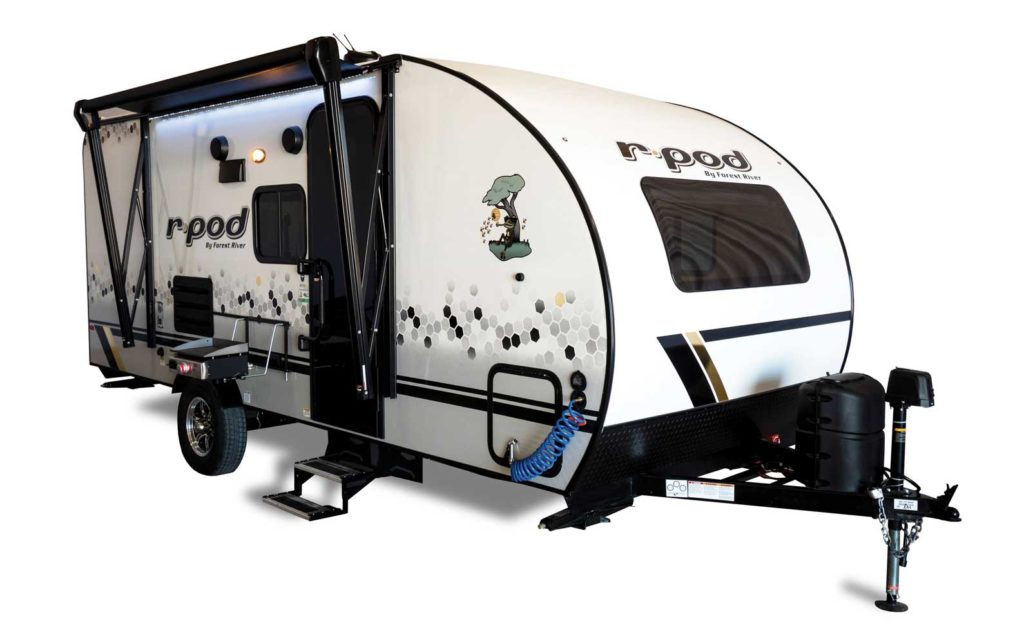
The R-Pod by Forest River is one of the most popular travel trailers under 5,000 pounds for sale because of the way it packs features into a nimble package.
R-Pods are designed to reach parts unknown with ease while still providing you with all the comforts of home. The R-Pod 193 features a unique kitchen design with a spacious pantry, dual bunk setup, a murphy queen bed, and even a central vacuum to keep the camper clean!
Key features:
- Murphy queen bed for maximum versatility
- Outdoor kitchen – rare for a rig this size
- One slide-out
- Black tank: 30 gallons
- Grey tank: 30 gallons
- Fresh water tank: 30 gallons
Rent an RV camper under 5000 lbs near you
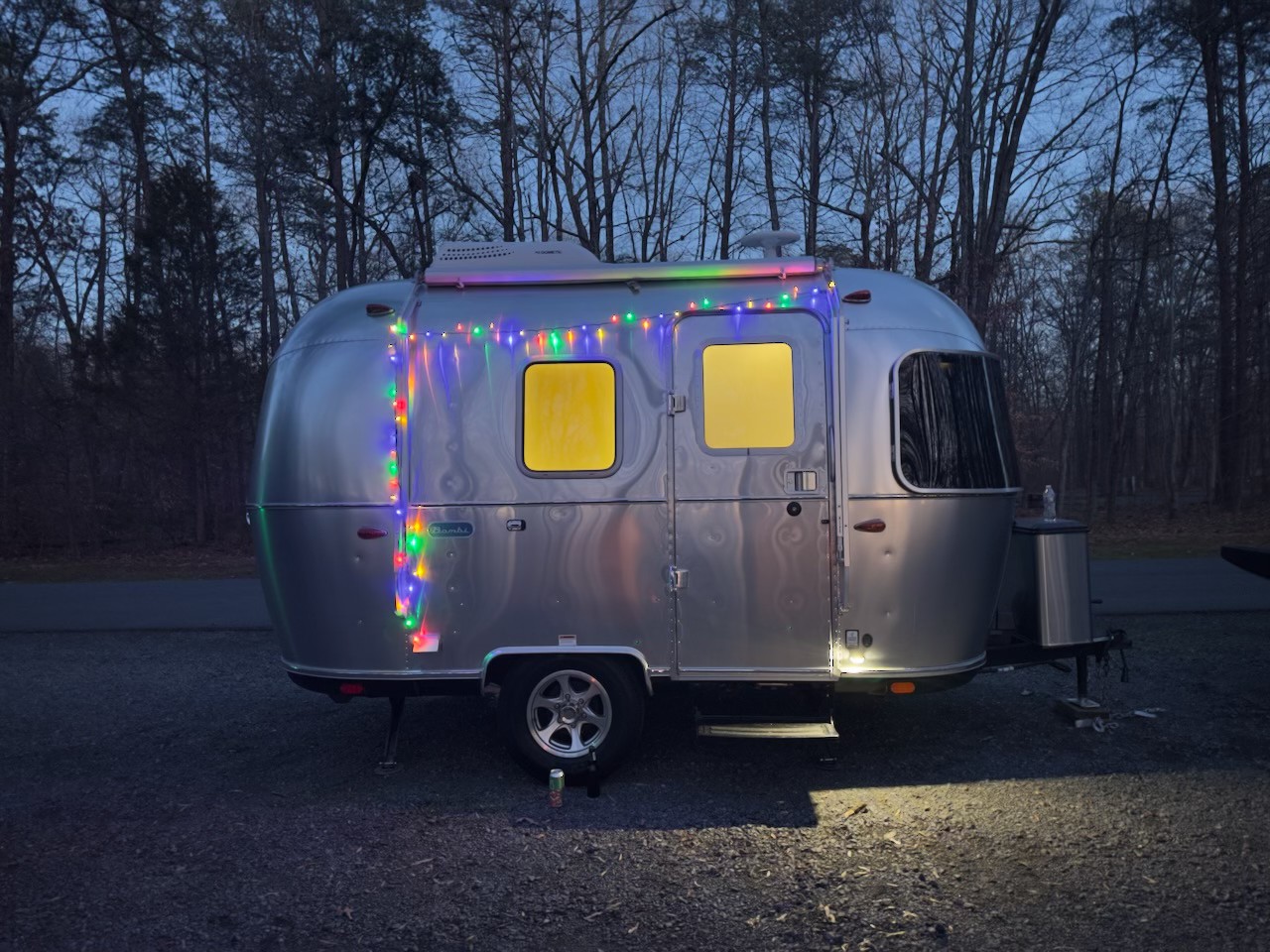
2. Airstream “Bambi” Sport 22FB
Starting price: $73,026 – A classic for a reason. This iconic silver bullet is nimble and perfect for couples or solo travelers who want to move locations frequently.
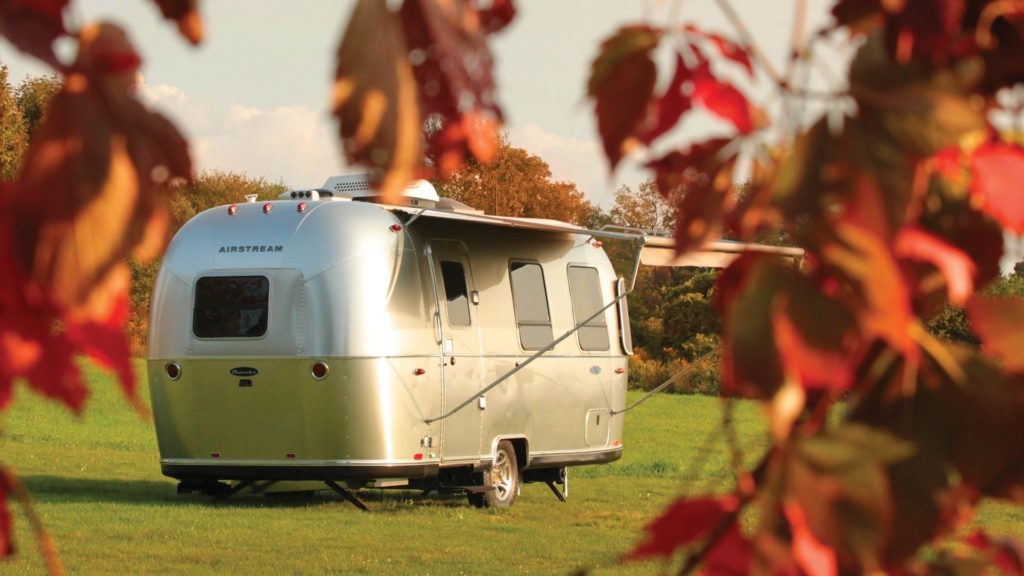
Airstream floorplans haven’t changed much over the years because they haven’t had to. Ever since the first Airstream rolled off the line in 1936, these rigs have been the epitome of maximizing the use of tiny spaces.
The Sport is an Airstream under 5,000 pounds that manages to fit ample storage, cutting-edge amenities, and incredible comfort into a small, shiny camper.
Key features:
- Spacious bed for two
- Large rear bathroom
- Full kitchenette
- Dinette converts to a bed to sleep two more people
- JVC stereo system
- Ample interior/exterior storage for its size
- Black tank: 18 gallons
- Grey tank: 24 gallons
- Fresh water tank: 20 gallons
Rent an RV camper under 5000 lbs near you
3. Winnebago Hike H171DB
Starting price: $32,438 – With its rugged exterior and generous storage, this rig is designed for the ‘adventur-ish’ who want to go where hotels can’t.
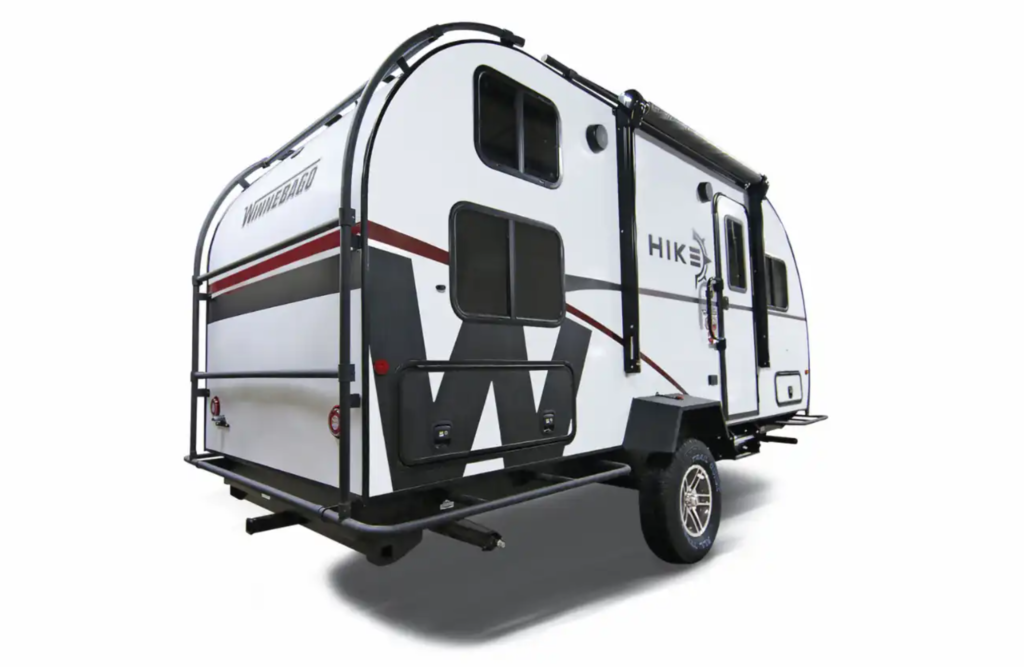
As one of the longest-running names in the RV industry, it’s little surprise that Winnebago created The Hike. This lightweight travel trailer under 5,000 pounds is the outdoorsy person’s dream.
That’s because The Hike features off-road tires and fenders, multi-use gear storage, a rigid exoskeleton for attaching bikes, kayaks, etc. — all while offering ultra-modern interior fixings.
Key features:
- Off-road ready
- U-shaped dinette
- Queen bed at front
- One slide-out
- Black tank: 25 gallons
- Gray tank: 25 gallons
- Fresh water tank: 31 gallons
Rent an RV camper under 5000 lbs near you
4. Oliver Legacy Elite
Starting price: $47,995
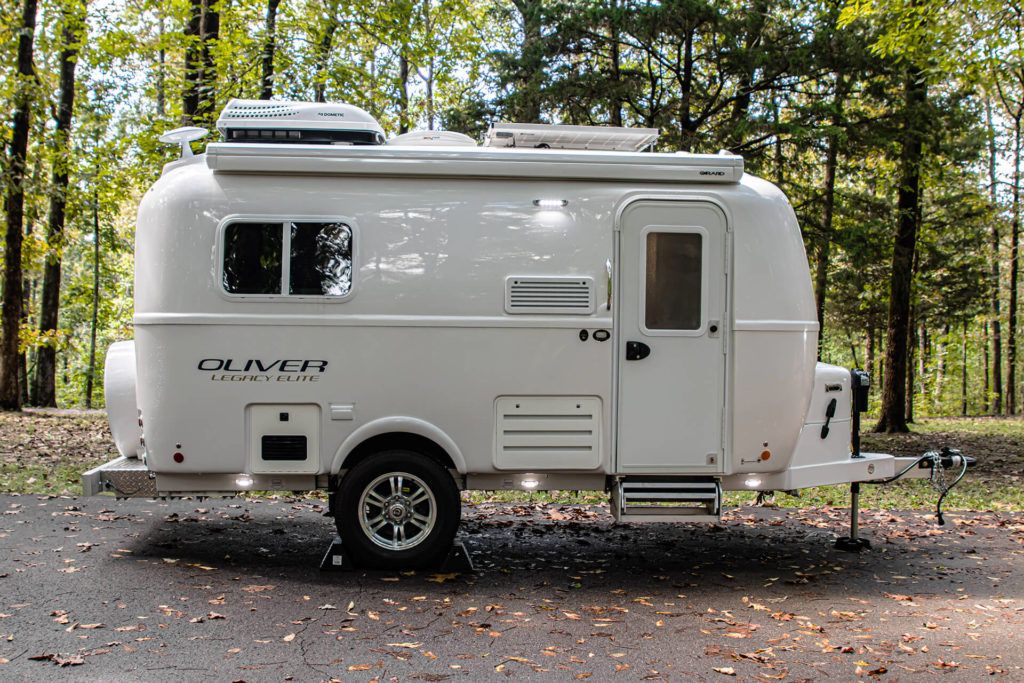
Oliver specializes in ultra-lite trailers under 5,000 pounds. They are also masters at double-hulled fiberglass camper construction — meaning all their trailers are four-season ready and tough as nails.
Oliver trailers have a cult-like following for good reason. Simply put, they are one of the highest quality and longest-lasting campers on the market. Olivers come loaded with high-quality finishings, cutting-edge tech, and dry camping amenities like built-in solar.
Key features:
- Large wet bath
- Full surround overhead lighted storage cabinets
- 2 burner stove and 3-way refrigerator
- Outside wash station
- Three-point power stabilizing system
- Black tank: 15 gallons
- Grey tank: 32 gallons
- Fresh water tank: 32 gallons
RV Campers Under 5000lbs For Rent Near You
5. Jayco Jay Feather Micro
Starting price: $39,995
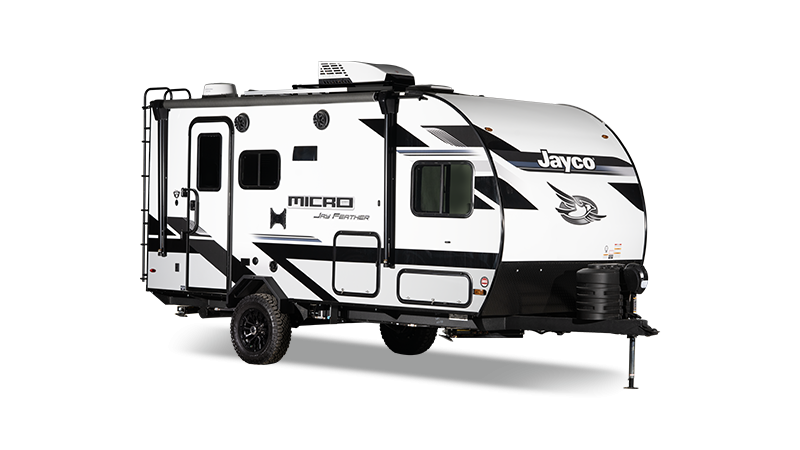
The Jayfeather is an ultra-light camper under 5,000 pounds that packs a lot of punch in a very small trailer. No matter which Jayfeather you choose, you’ll get a camper that weighs under 5,000 pounds and features amenities for camping in style.
Key features:
- Dry bath in any floorplan
- Kitchenette or full kitchen options, depending on the floor plan
- Baja package off-road option
- Black tank: 30 gallons
- Grey tank: 30 gallons
- Fresh water tank: 55 gallons
Rent an RV camper under 5000 lbs near you

6. Gulf Stream Vista Cruiser
Starting price: $43,109
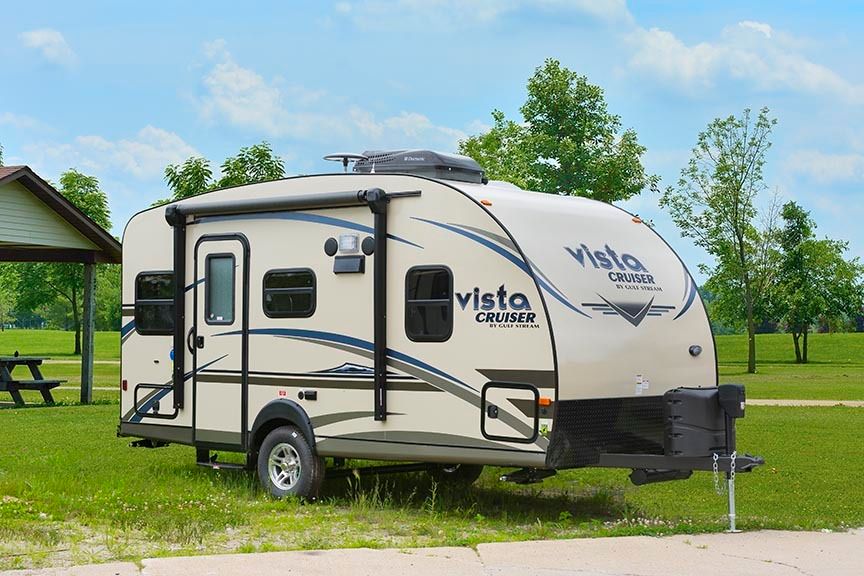
The Vista Cruiser is a full lineup of travel trailers under 4,500 pounds. Gulf Stream is a well-known and family-owned RV manufacturer that blazed a trail with the Vista Cruiser by designing these trailers specifically for SUVs or trucks with lower tow ratings.
But that doesn’t mean they skimped on features — Vista Cruisers have many of the same options you’d find in larger campers.
Key features:
- Dry bath in any floorplan
- One-piece fiberglass roof
- Ample storage throughout
- Optional bumper mount grill
- Black tank: 33 gallons
- Grey tank: 33 gallons
- Fresh water tank: 27 gallons
Rent an RV camper under 5000 lbs near you
7. Starcraft Super Lite Maxx
Starting price: $32,543
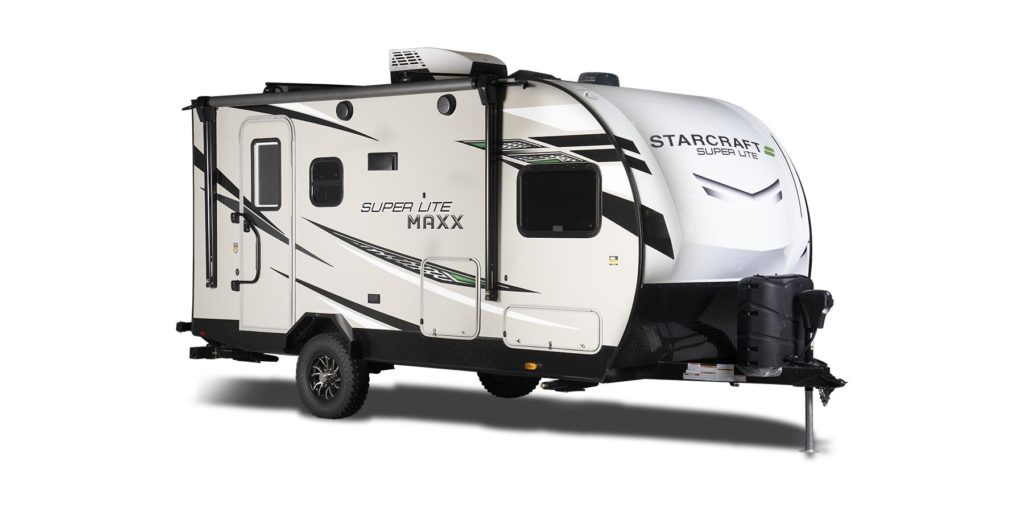
This slick-looking line of campers under 5,000 pounds represents the cutting edge of technology and comfort. Starcraft designed the Lite Maxx line specifically so you can take longer camping trips in a nimble and easy-to-tow package.
Key features:
- Dry bath in any floorplan
- Molded fiberglass front cap and low-maintenance PVC roof membrane
- Optional slide-out
- Sleeps up to 8
- Black tank: 33 gallons
- Grey tank: 33 gallons
- Fresh water tank: 27 gallons
Rent an RV camper under 5000 lbs near you
8. Scamp Lite 19 Deluxe Fifth-Wheel Trailer
Starting price: $23,695
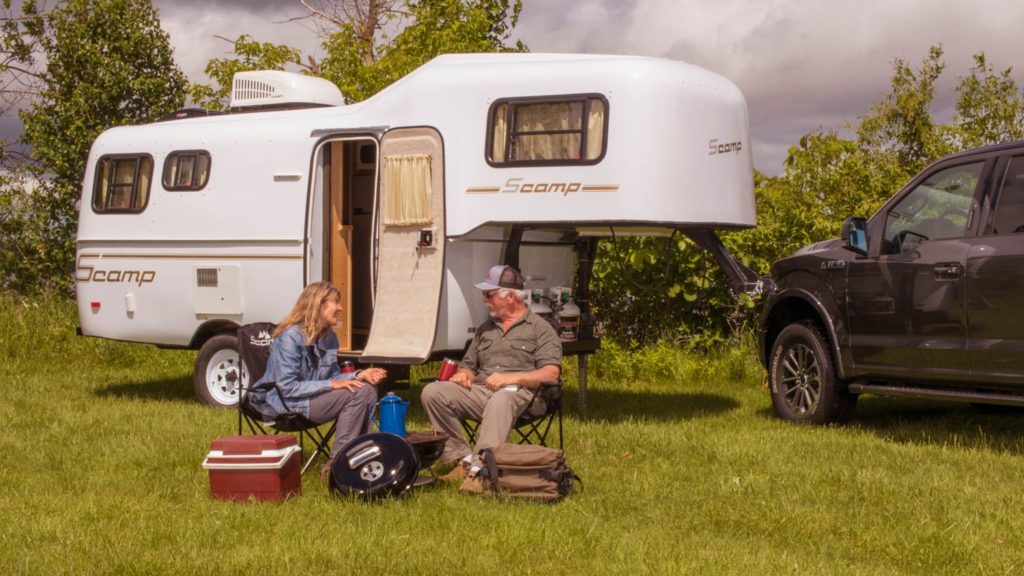
When it comes to RVs under 5,000 pounds, options for fifth-wheel trailers are virtually non-existent except for this creative rig from Scamp.
As the only fifth-wheel trailer on our list, this camper can be easily towed by a midsize truck such as a Ford Ranger, Chevy Colorado, Nissan Frontier, Toyota Tacoma, etc. By extending part of the camper over the truck bed, the Scamp Deluxe creates maximum space in an ultra-light trailer.
Key features:
- Wet & dry bath options
- Fold down dinette for extra sleeping space
- 2 burner stove and large fridge/freezer
- Under stair storage
- Black tank: 9 gallons
- Grey tank: 12 gallons
- Fresh water tank: 12 gallons
Rent an RV camper under 5000 lbs near you
How do I know if my vehicle can actually handle this?
Okay, this is where people get nervous—and honestly, it’s smart to be careful here. Towing something your vehicle can’t handle isn’t just inconvenient, it’s genuinely dangerous.
Here’s what you need to check. Pull out your owner’s manual (or look up your VIN online) and find three numbers:
Maximum towing capacity — This is what everyone looks at first. For a 5,000 lb trailer, you want at least 5,500 lbs of capacity. Ideally more.
Payload capacity — This one trips people up. It’s how much weight your vehicle can carry, including passengers, gear IN the vehicle, and the tongue weight from the trailer pressing down on your hitch (which is typically 10-15% of the trailer weight, so 500-750 lbs for a 5,000 lb rig).
Tongue weight rating — Most hitches are rated for a specific amount of downward pressure. Make sure yours can handle it.
Camping World has a great tow calculator where you can punch in your vehicle info and see what you can safely tow. It’s worth spending five minutes on before you fall in love with a specific camper.
The stuff that actually matters (beyond the numbers)
The math is one thing. Real-world towing is another. According to Roamly’s comprehensive towing guide, proper weight distribution might matter more than raw towing capacity.
The 60/40 rule: Put 60% of your trailer’s weight on or ahead of the axles, 40% behind. This prevents sway and keeps your rig stable at highway speeds. One guy told us he learned this the hard way when all his gear was in the back and his trailer fish-tailed on the freeway. Not fun.
Account for EVERYTHING that adds weight: Water in your fresh tank (8.3 lbs per gallon). Propane. Your mountain bikes. The firewood you’ll inevitably buy. The cooler. Everyone’s luggage. It all counts. Open Roads RV recommends adding 500 lbs minimum for cargo in trailers under 5,000 lbs. Be honest with yourself about how much stuff you actually bring camping.
Get weighed. Seriously. Drive your loaded rig to a CAT truck scale (you’ll find them at truck stops). It costs like $12 and tells you EXACTLY what you’re towing. Escapees SmartWeigh even weighs each individual tire to catch weight distribution issues before they cause problems.
Equipment you actually need (not just nice-to-have)
Weight distribution hitch — For anything over 3,500 lbs, this isn’t optional. It spreads the load across your vehicle and trailer axles instead of dumping everything on your back bumper. Heartland RV’s research shows these make a huge difference in handling. Your steering feels tighter, braking improves, and you don’t get that “tail wagging the dog” feeling when semis pass you.
Cost: $300-$800. Worth it: Absolutely.
Brake controller — Most states legally require this for trailers over 3,000 lbs. It syncs your trailer’s brakes with your vehicle’s brakes so you’re not relying solely on your SUV to stop 10,000+ pounds of combined weight. Get an electronic one—they’re smoother and more responsive than the old friction-based models.
Sway control — Wind gusts happen. Semis passing at 70 mph happen. Sway control (either friction-based or electronic) detects and corrects trailer movement before it gets scary. If you’re approaching 5,000 lbs, Camping World recommends going electronic.
Before every single trip, check:
✓ All lights working (brake, turn, running)
✓ Safety chains crossed under the tongue and connected
✓ Breakaway cable attached to vehicle frame (not the ball mount)
✓ Trailer brakes functional
✓ Tire pressures on both vehicles
✓ Hitch ball and coupler locked
✓ Cargo secured and nothing sliding around
One woman told us she keeps a laminated checklist velcroed to her dashboard. Takes her two minutes before pulling out and she’s never forgotten anything. Not a bad idea.
Want to practice towing in a low-stakes situation? Rent something nearby for a weekend. Check out RVs available for rent in:
Or browse one-way RV rentals if you want to test your skills on a real road trip without backtracking.
Let’s talk about what you’re actually signing up for
Here’s where we get honest. Lightweight trailers are awesome for a lot of things, but they’re not perfect for everything. Let’s break down what works and what doesn’t.
What’s genuinely great about going lightweight
You’re not buying a $60,000 truck. This one can’t be overstated. Keep your fuel-efficient SUV as your daily driver. Tow it on weekends. Done. According to Bish’s 2025 market data, single-axle campers under 5,000 lbs are the only segment showing growth right now (up 0.45%) while the overall RV market dropped 5.5%. People are choosing these deliberately because the math works.
Campsite access is a real thing. Talk to anyone who’s tried to book Yosemite in July—those primo spots that book up a year in advance? Many have 25-foot length limits. Big rigs are automatically out. Camping World points out that lightweight trailers fit into those tucked-away, tree-lined sites where you actually want to be anyway.
A couple from Colorado told us they switched from a 32-foot fifth wheel to a 22-foot R-Pod specifically because they were tired of getting shut out of the good campgrounds. They don’t miss the extra space as much as they thought they would.
It’s legitimately easier to tow. Miss a turn? You’re not spending 15 minutes finding a place to turn around. Backing into a tight spot? Still nerve-wracking but manageable. Gas station with narrow lanes? You fit. Heartland RV’s owner surveys show that lighter trailers make it possible for couples to share driving duties—less intimidating for the person who doesn’t tow often.
Fuel savings are real. J.D. Power research confirms that every 1,000 lbs you’re not towing can improve your fuel economy by 1-2 MPG. Over a 3,000-mile summer trip, that’s hundreds of dollars back in your pocket. More beer money for the campground. Just saying.
The stuff nobody mentions until after you buy
Everything is smaller than you think. Look, the photos online make things look spacious. Then you show up and realize the “kitchen” is basically a narrow counter with a two-burner stove. The dinette seats four people if everyone’s really friendly. Storage? You’re playing 3D Tetris with your gear to make it all fit.
One family said they do a “shakedown trip” now—they pack everything they think they need, realize half of it won’t fit, then repack smarter. It’s a learning curve.
Wet baths take getting used to. Most trailers in this weight class use wet baths—your shower, toilet, and sink all share one 3×3 foot space. You shower, everything gets wet, then you squeegee down the walls and toilet before you can use the bathroom. RVezy’s 2024 survey found this is the most polarizing feature—people either don’t mind at all or hate it passionately.
The folks who love wet baths say it’s efficient and easy to clean. The folks who hate them… well, they usually end up using campground bathrooms.
You’re not getting luxury features. Forget the outdoor kitchen. No washer/dryer. Often no oven, just a two-burner cooktop. Some don’t even have a microwave to save weight. Camping World notes that manufacturers are choosing essentials over extras, which means you need to be realistic about what matters to you.
One guy told us he actually prefers this—forces him to spend more time outside around the campfire instead of hanging out inside watching TV. But if you’re someone who values having all the comforts of home, be honest with yourself before buying something lightweight.
Build quality varies a lot. Aluminum framing and lighter materials are standard to hit these weight targets. That’s good for towing but it means things feel less solid. Cabinet doors might rattle. Walls might flex a bit. It’s the trade-off for keeping weight down. Read reviews carefully and inspect before buying.
Bottom line?
If your idea of a perfect trip is finding a remote campsite, hiking all day, then cooking dinner on the camp stove before sitting around a fire—lightweight trailers are perfect. If you need room to spread out, want a residential-size refrigerator, and plan to spend rainy days inside watching movies—maybe look at heavier models.
Curious about the other end of the spectrum? Check out Class A RV rentals to see what full-sized luxury looks like, or browse all campers for rent to compare sizes.
Should you rent first or just buy?
Rent. Seriously, just rent one first.
Here’s why: that trailer that looks perfect on the dealer lot might drive you crazy on day three. Maybe the dinette-to-bed conversion is annoying. Maybe the bathroom door hits the bed weird. Maybe you realize you actually need WAY more storage. Or maybe—and this happens a lot—you realize RV camping just isn’t your thing.
Our guide on lightweight campers emphasizes this: renting lets you test different models before deciding. Think of it like a week-long test drive instead of a 20-minute lap around the dealership.
What you actually learn by renting
Your vehicle’s real limits. Towing specs on paper don’t tell you how your SUV handles a mountain pass at 9,000 feet. Or how it feels when wind gusts hit you on the highway. Or whether you’re comfortable backing into a campsite after a long day of driving. One weekend towing to a nearby state park will tell you everything you need to know about whether you need to upgrade your vehicle.
Your actual must-haves. RVing Know How surveyed hundreds of owners and found that 60% wish they’d tested more layouts before buying. Things you think will matter (like a bigger fridge) might not. Things you didn’t think about (like where the bathroom door opens) might drive you nuts. You won’t know until you’ve actually camped in one for a few days.
Whether you even like RV camping. Not everyone does! Some people rent an RV, try it for a week, and realize they prefer hotels. Or tent camping. Or AirBnBs. Better to figure this out after spending $800 on a rental than $40,000 on a trailer that sits in your driveway.
When does buying make sense?
Once you’ve rented a few times and know what you want. Once you’ll use it enough (15+ days/year minimum) to justify the cost versus rental fees. Once you’ve verified your vehicle can handle it and you’ve found the right floor plan.
Also factor in: insurance costs, storage fees (if you don’t have space at home), maintenance, and registration. Camping World’s analysis shows these hidden costs can add $1,500-$3,000/year. If you’re only camping 10 days a year, renting often makes more financial sense anyway.
RV Insurance for Campers: Protection for Your Lightweight Rig
Lightweight campers under 5,000 pounds are the “Goldilocks” of the RV world. They’re towable by many SUVs and trucks, making them accessible and easy to handle. But a lighter rig doesn’t mean you should lighten up on the details, especially when it comes to protecting your investment.
Just like you consider cargo capacity and sleeping space, you need to think about RV insurance for campers. Roamly understands that a pop-up isn’t a Class A, which is why they offer customizable policies that fit your specific needs, whether you’re a weekend warrior or a full-time adventurer. Roamly’s policies can protect against everything from theft and vandalism to weather damage, giving you the peace of mind to focus on the fun. With options for full coverage, roadside assistance, and even protection for your personal belongings, you can rest easy knowing your camper is secure, even when it’s just parked at home.