

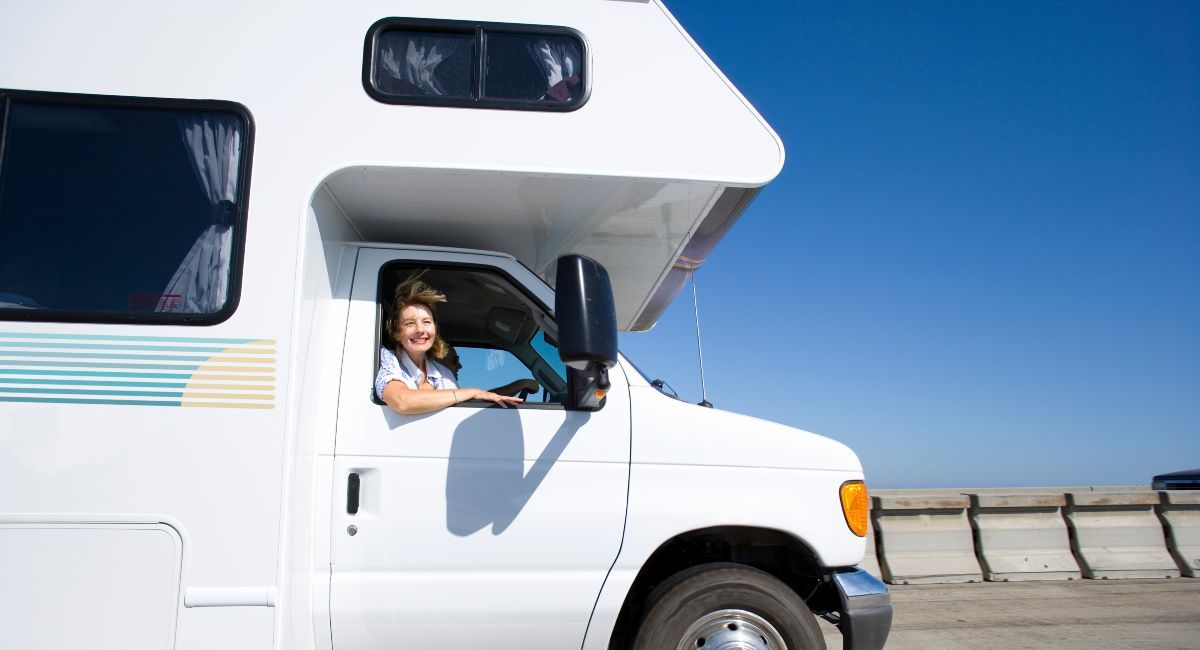
The first time you sit in the driver's seat of a rental RV, two things happen: the rig feels bigger than it looked in the photos, and you realize you can't tell where the back is. Both feelings fade fast. Driving an RV isn't really a new skill — it's a few small habits stacked on top of regular driving, plus knowing what to ask at the rental yard. This guide is for renters, not owners — so it leads with what to do at pickup, not specs for a rig you bought.
The short version:
- Driving an RV comes down to four habits: go slow, leave at least four seconds of following distance, account for tail swing on turns, and plan an RV-safe route.
- It's normal to be nervous — most renters say it clicks within the first hour.
- Ask the rental company three things at pickup: the rig's height, length, and width with mirrors. Then have them show you the controls, levelers, and propane shutoff.
- If driving worries you, rent a Class B campervan or smaller Class C — they drive most like a big van or truck. A 30-plus-foot Class A is the most intimidating first rig.
- Don't want to maneuver the big rig into a tight park? Tow a vehicle and leave the RV at camp — or skip driving entirely with delivery.
Is it hard to drive an RV for the first time?
Driving an RV for the first time feels intimidating but clicks fast. Most renters report being comfortable within the first hour once they slow down, leave a generous gap to the car ahead, and watch their tail swing on turns. The Reddit r/RVLiving thread on first drives reads less like fear and more like "by the second day it felt normal."
In our experience, the renters who feel best behind the wheel are the ones who treated the pickup walkthrough as their first driving lesson, not a formality — they asked the host to ride along for the first few miles, or they took the rig to an empty lot and practiced turns, backing, and feeling out the mirrors before hitting the highway. The big mental shift is accepting that you're not driving a car. You're driving a small house with a long tail. Once that lands, the rest follows.
What actually changes vs. a car:
- Height: You sit higher, so your sense of distance shortens.
- Length: The back end follows your turn line, not the front wheels.
- Width: Mirrors add a foot or more on each side — close calls in parking lots come from forgetting they're there.
- Mass: Stopping takes longer. Acceleration takes longer. Wind matters more.
- Mirrors are your back-up camera. Most rigs have a rear camera too, but you'll use the side mirrors more than you ever did in a car.
What should you ask the rental company at pickup before you drive off?
Ask for three numbers and a four-part walkthrough. Numbers: the rig's height, length, and width with mirrors. Walkthrough: where the controls are, how the levelers work, where the propane shutoff is, and how to retract the slides and the awning.
The four key numbers and what they do for you:
- Height (with the antenna and any rooftop AC). Decides which bridges and gas-station canopies you can clear. Anything over about 11 feet rules out plenty of older highway underpasses; over 13.5 feet rules out a lot of city streets.
- Length. Decides which campsites fit, which mountain roads ban you (Glacier's Going-to-the-Sun Road is 21 feet, for example), and how wide your turns need to be.
- Width with mirrors. Usually 96–102 inches. That's the figure for clearing fuel pumps and the carwash.
- GVWR. Mostly licensing — most rentals are under 26,000 pounds and need only a standard license, but it's worth confirming.
The walkthrough should also include the levelers, the propane shutoff (turn it OFF while driving), the slide controls, the awning retract, the tank-monitor panel, the generator start procedure, and how to disconnect from shore power. If anything is unclear, ask twice.
A worthwhile add: ask the host to ride along for the first half-mile or to spot you backing out of the lot. Most will say yes.
What are the core driving habits — tail swing, following distance, braking, turns?
The four habits that matter most: go slower than you would in a car, leave at least four seconds of following distance, account for tail swing on every turn, and plan an RV-safe route that avoids low clearances. Practicing turns and backing in an empty lot before you hit traffic is the single best 20-minute investment of the trip.
The four habits in plain language:
1. Go slow. Most experienced RVers cruise at 55–60 mph on highways, even where the limit is 70. The rig handles wind, lane-change reactions, and emergency braking better below 60.
2. Leave at least four seconds of following distance. Pick a fixed object — sign, overpass — and count "one-thousand-one, one-thousand-two" until you pass it. Should be four.
3. Account for tail swing. Renters we talk to are most surprised by tail swing — the back end of the rig swings wide on turns and clips things at the gas pump that the side mirrors never showed. Swing wide before you turn so the rear corner clears the pump island.
4. Plan an RV-safe route. Use a routing app that asks for your rig's height and length and routes around low clearances. RV Trip Wizard, CoPilot RV, and Google Maps' truck mode are the common ones. Double-check apps against signage.
A few specifics:
- Braking distance roughly doubles vs. a car at the same speed.
- Wind and rain matter more. Ease off the gas, both hands on the wheel.
- Backing always uses a spotter. Our pro tips for backing up a trailer cover the technique.
- Propane off while driving is the most-skipped safety habit. The fridge will hold cold for several hours without it.
Which rental RV class is easiest to drive if you're nervous?
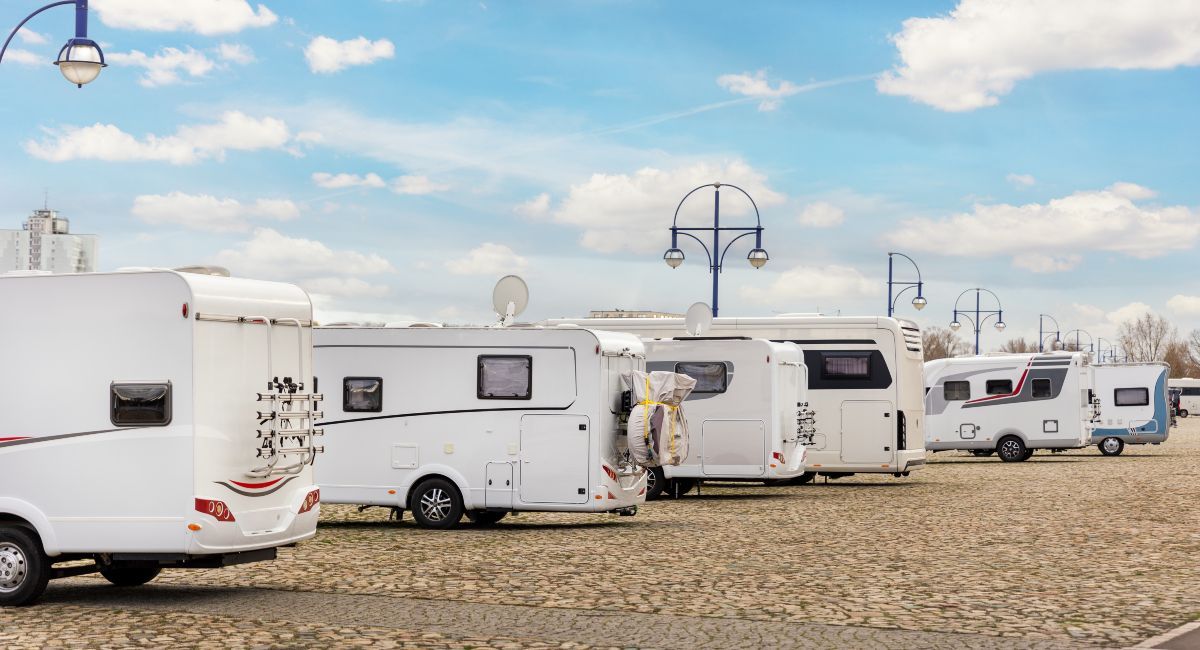
If driving is the worry, rent a Class B campervan or a smaller Class C — both drive most like a large van or truck, while a 30-plus-foot Class A is the most intimidating first rig.
Here’s a simple breakdown of how each RV class typically feels to drive.
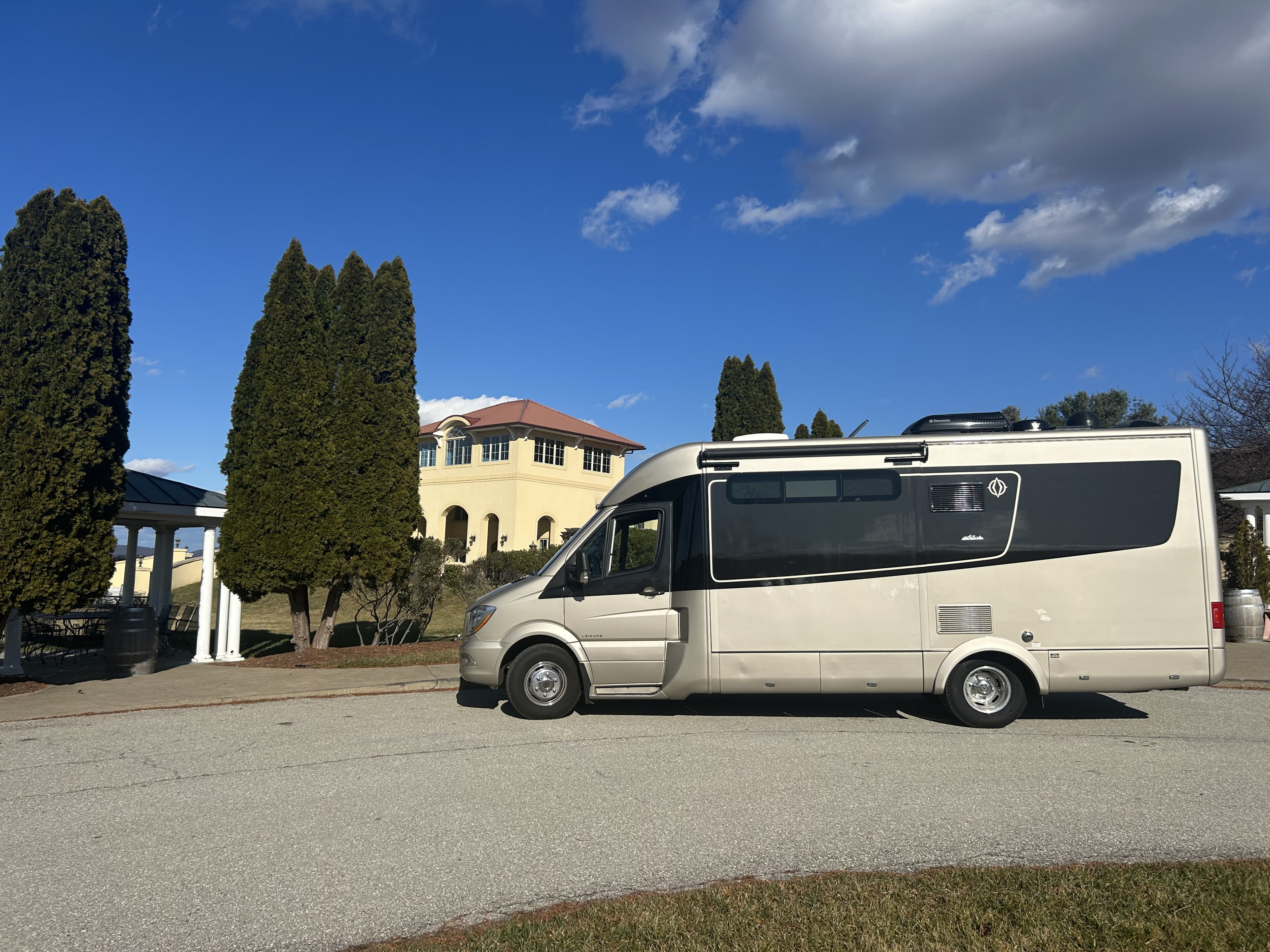
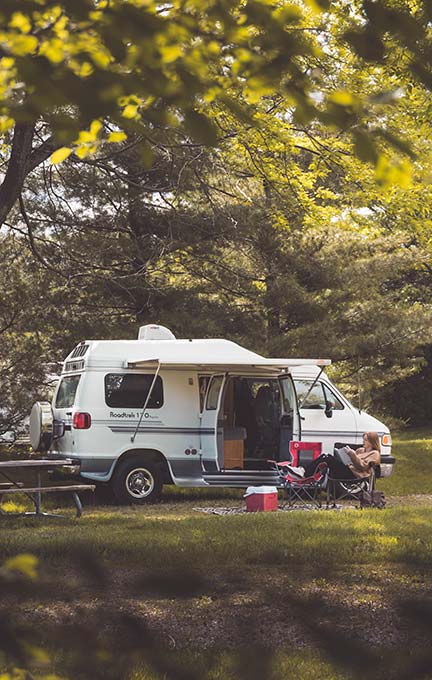
Class B RVs, often called camper vans, typically range from 17 to 24 feet long. They drive much like a high-roof cargo van, such as a Mercedes-Benz Sprinter, Ford Transit, or Ram ProMaster. They are generally the easiest option for first-time renters because they fit into most standard parking spaces and do not require specialized driving skills.
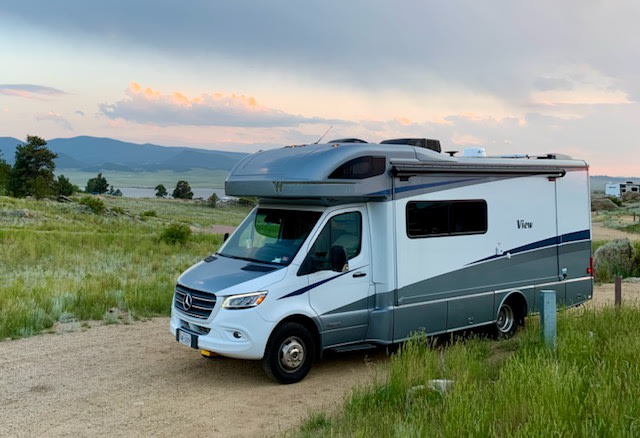
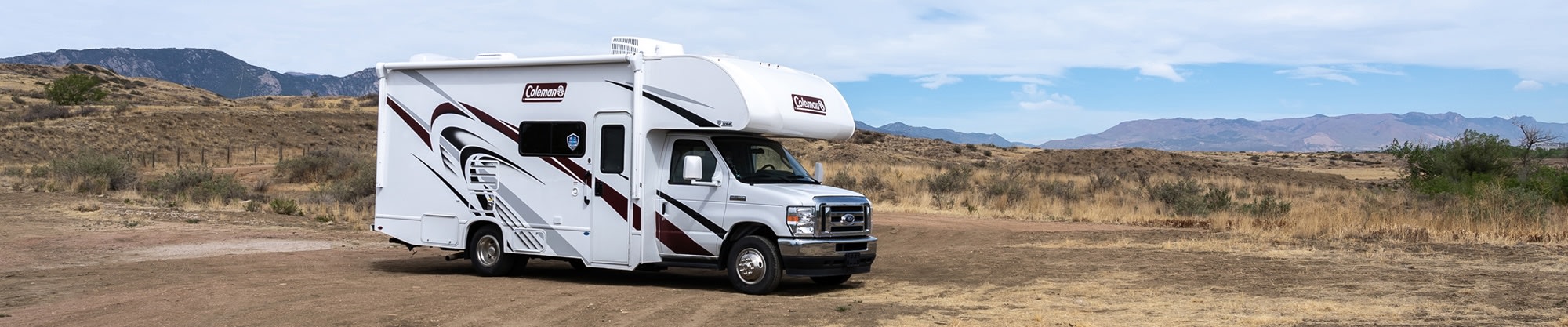
Class C RVs usually range from 20 to 32 feet long and feel similar to driving a box truck built on a van chassis. They are larger than camper vans but remain approachable for most new renters. A Class C can be a practical middle ground for travellers who want more interior space without moving up to a bus-sized motorhome.
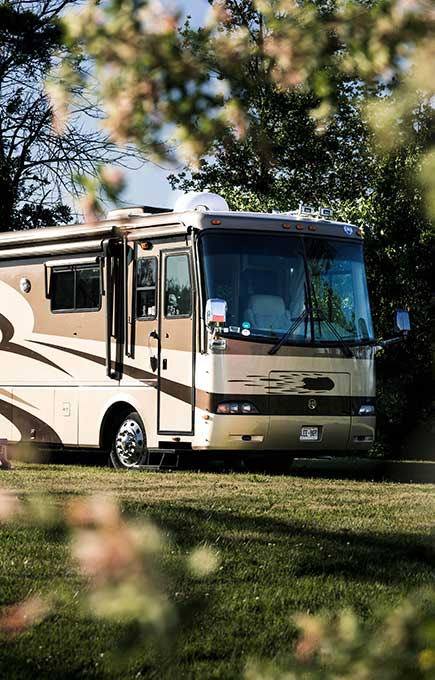
Class A motorhomes range from approximately 25 to 45 feet and drive more like a bus. Their additional width, height, and length can make them intimidating for first-time renters, especially on narrow roads or in busy parking areas. New renters who choose a Class A should generally stay toward the smaller end of the size range.
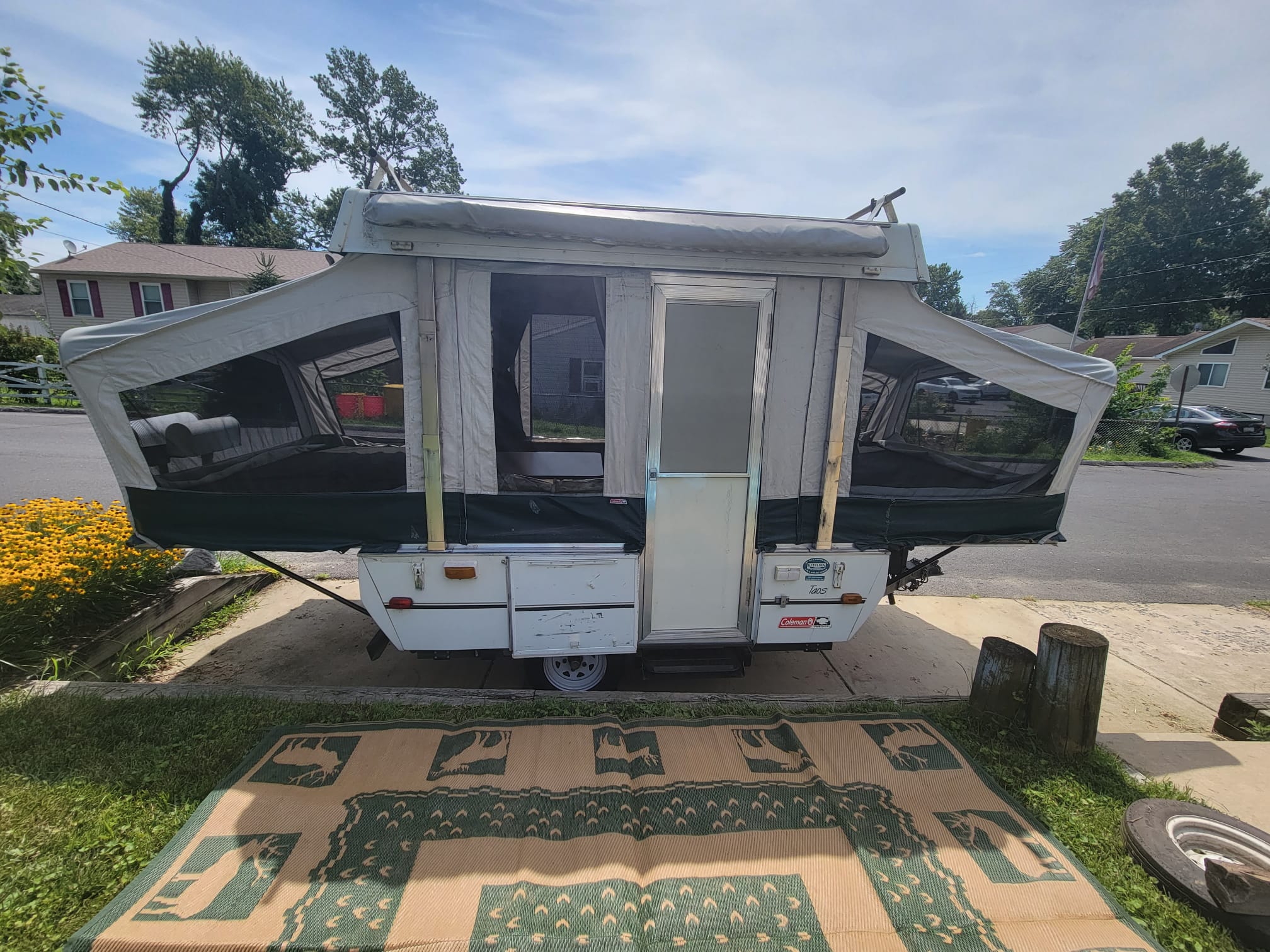
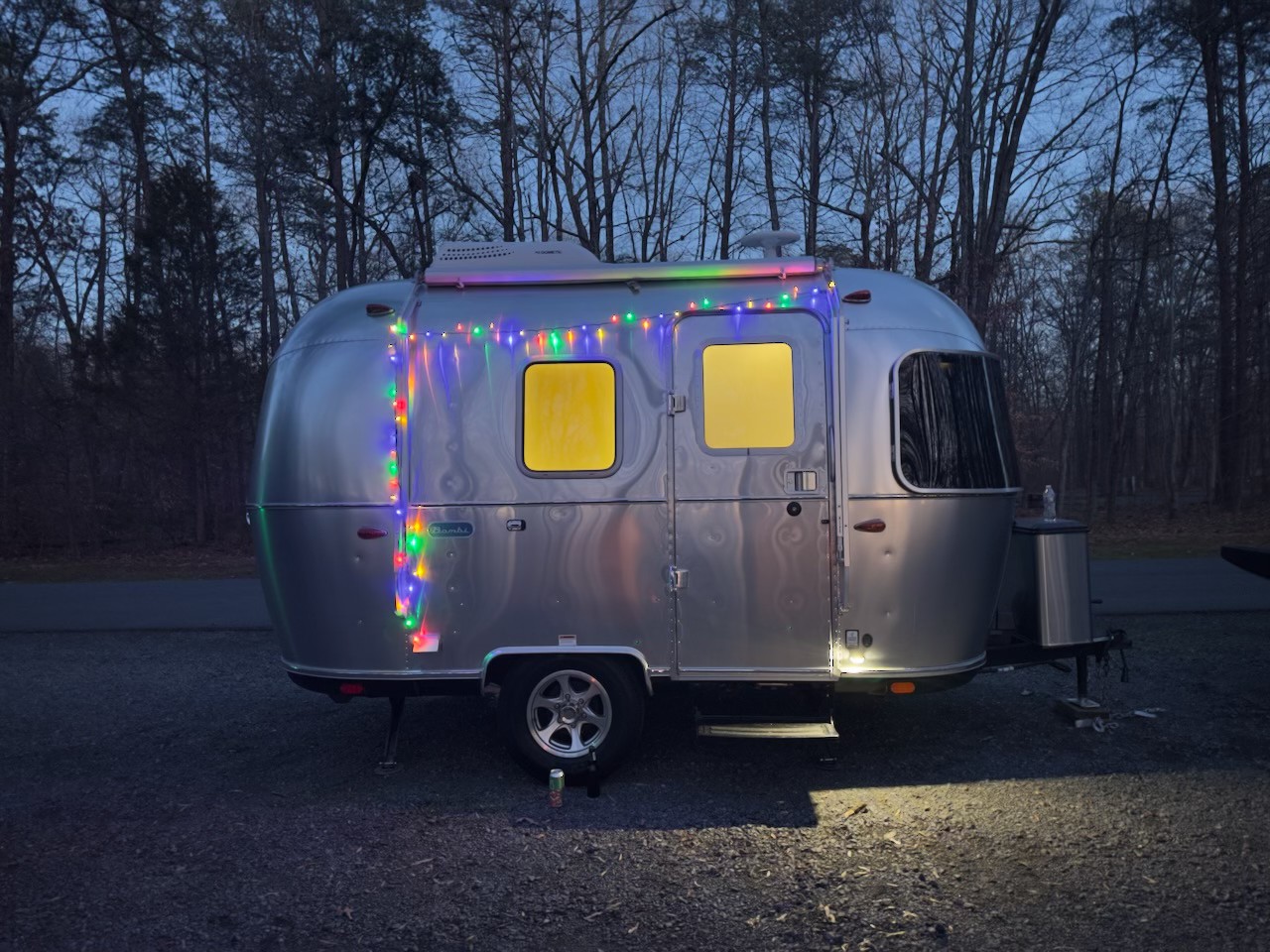
Travel trailers and fifth-wheels require a tow vehicle in addition to a trailer that may range from 18 to 40 feet long. Towing involves different skills, including wider turns, longer stopping distances, and more difficult reversing. First-time RV renters should generally avoid towable models unless they already have experience pulling a trailer.
We've heard from plenty of first-timers who picked a Class A because it looked comfortable, then wished they'd rented a campervan for the trip's tight mountain roads. For the trade-offs across classes, see our big guide to RV classes, or browse Class B campervan rentals if a van is the call.
How do you avoid driving the big rig into tight parks (or skip driving altogether)?
Two escape hatches a generic driving guide never mentions. First: rent a smaller rig and tow a separate vehicle so you leave the RV set up at camp and explore in a car. Second: don't drive the rig yourself at all — have it delivered and set up at your campsite by the host.
The "tow a car" play works especially well at Yellowstone, Glacier, Grand Teton, and Acadia. If your rental can tow, our guide to towing a separate vehicle to camp walks the basics.
The "have it delivered" play is even simpler. You book a rental that offers delivery, the host drives the rig to your campsite, levels it, hooks up electric, water, and sewer, and picks it up at the end. You never get behind the wheel. Renters we hear from who use delivery for trip #1 often end up driving a rental on trip #2 — because the first trip showed them the RV part is the fun part, and the driving was the only thing standing in the way. Our RV rental delivery guide covers how it works.
Do you need a special license, and where can passengers sit?
Most RV rentals need only a standard driver's license. Above a 26,000-pound GVWR, several states (including California, New York, Michigan, and a few others) add a non-commercial Class A or B requirement. The vast majority of rentals on Outdoorsy are under that threshold.
A few rules-of-thumb:
- Most Class B and C rentals fall well under 26,000 pounds.
- Larger Class A motorhomes (typically 36+ feet) can cross the threshold; check the GVWR on the listing.
- State variation matters. California uses the 26,000-pound line; New York requires an "R" endorsement on a Class D for over-26,000-pound RVs; Michigan has the "double R" endorsement for some fifth-wheel-plus-trailer setups; most states have no additional requirement at all.
- Age requirements: Outdoorsy's general rule is 25 and up to rent and drive, with some hosts accepting renters aged 21–24.
For the state-by-state version, the Outdoorsy guide to RV driver's license requirements covers every state's rule.
On passengers: everyone moving must be in a real seat with a seatbelt. Check the listing for the number of seatbelts available — that's the number of riders the rig can legally carry on the road.
And one more habit worth adopting on a first trip — the 3-3-3 rule: drive no more than 300 miles in a day, arrive by 3 p.m., and stay at least 3 nights. Some renters use a softer 4-4-4 (drive no more than 4 hours, arrive by 4 p.m., stay 4 nights) for shorter trips.
Key takeaways
- The four habits: go slow, count to four for following distance, watch tail swing on turns, plan an RV-safe route.
- At pickup, get three numbers (height, length, width with mirrors) and a four-part walkthrough (controls, levelers, propane shutoff, slides/awning).
- Easiest classes to drive first: Class B campervan or smaller Class C. Avoid a big Class A for trip #1 if you're nervous.
- Escape hatches: rent smaller and tow a car to camp, or have the rig delivered so you never drive it.
- License: standard license works for almost all rentals (under 26,000 lbs GVWR).
About this guide
This guide was prepared by the Outdoorsy editorial team. License rule-of-thumb thresholds, following-distance norms, tail-swing technique, and pickup walkthrough specifics were verified in June 2026 against the Outdoorsy Guide to RV Driver's License Requirements, the Big Guide to RV Classes, the Roadtrippers first-time-driving guide, and the Escapees RV Club state-by-state licensing reference. State licensing rules change — confirm with your home state DMV before booking a rig over 26,000 lbs GVWR.